

 Image 1 of 2
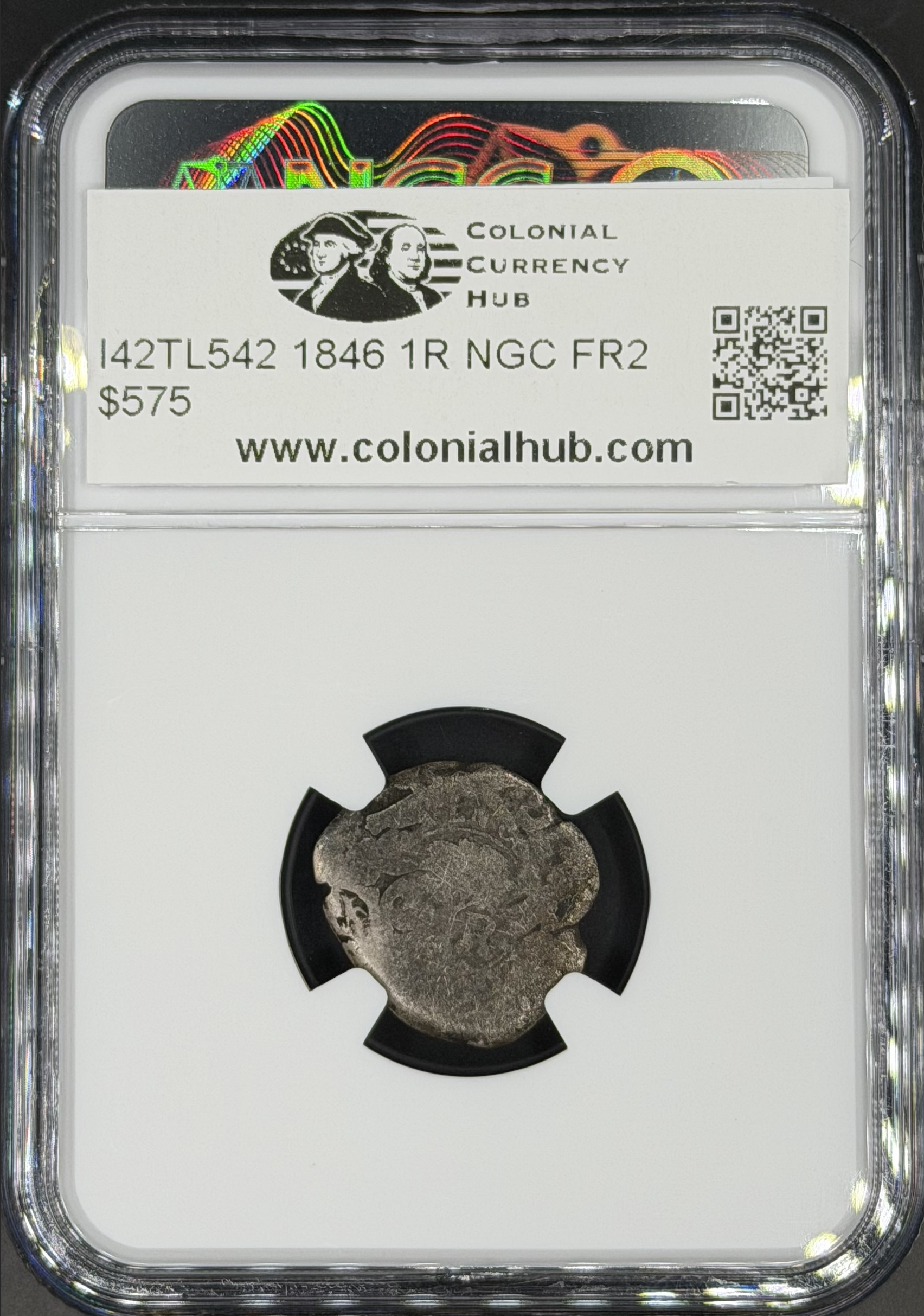 Image 2 of 2
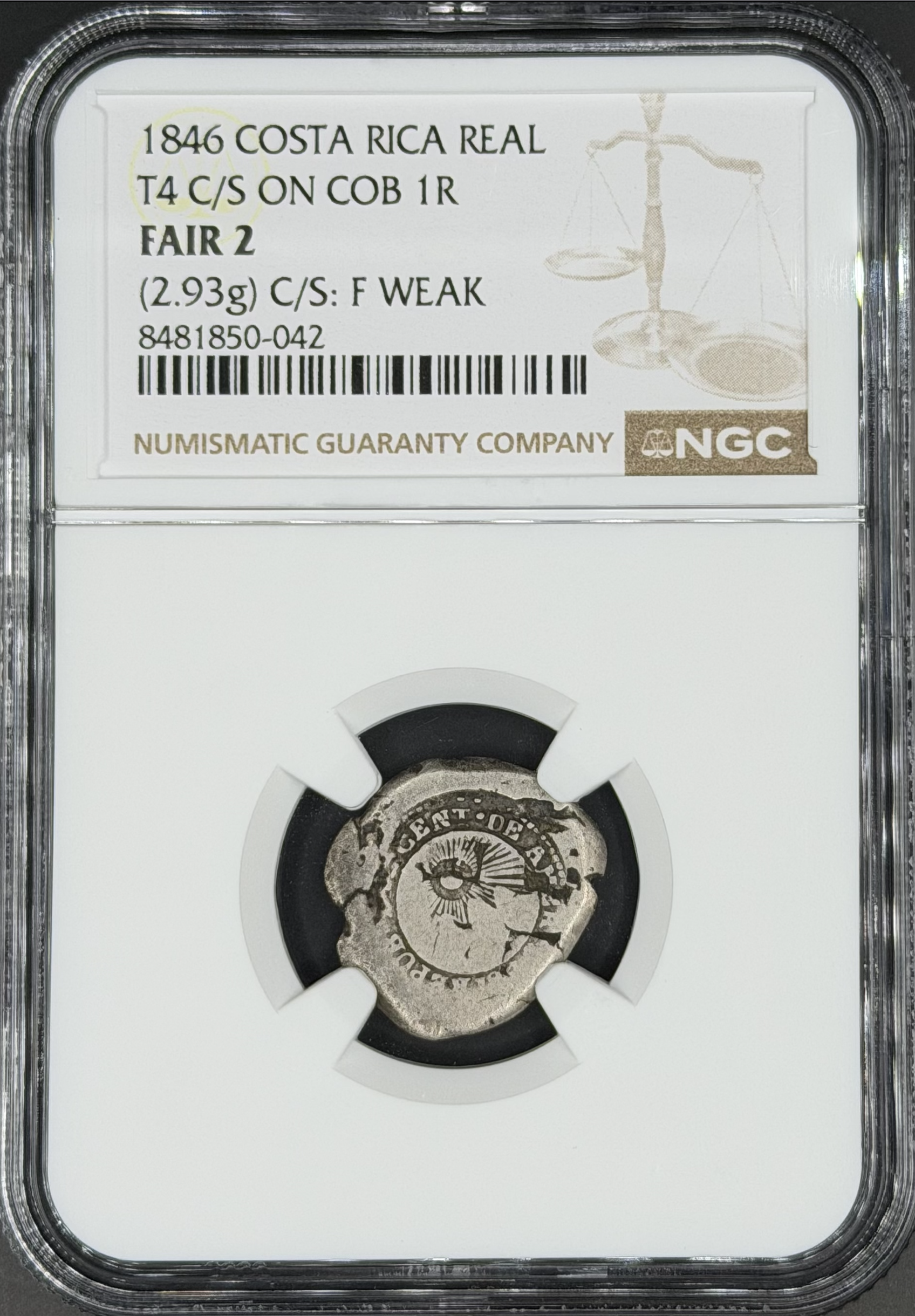
The 1846 1 Real Costa Rica T4 counter stamp on cob, graded NGC FR-2 with a C/S F designation, is a rare and historically significant specimen from early Costa Rican numismatics; the original hand-struck silver cob shows heavy wear consistent with circulation, and the bold T4 counterstamp—applied locally to validate weight or value—adds provenance and localized monetary context to the piece. Surface details are heavily abraded, with major devices and legends largely indistinct, yet the counterstamp remains discernible enough to confirm attribution and typology for collectors and researchers. The FR-2 grade indicates extensive flattening and loss of finer detail, while the C/S F note signals market or condition qualifiers important to advanced dealers. Despite its low technical grade, this coin carries strong appeal to specialists of Central American colonial and early republican issues because of its rarity, historical usage evidence, and the story it tells about regional currency practices in mid-19th-century Costa Rica.
The 1846 1 Real Costa Rica T4 counter stamp on cob, graded NGC FR-2 with a C/S F designation, is a rare and historically significant specimen from early Costa Rican numismatics; the original hand-struck silver cob shows heavy wear consistent with circulation, and the bold T4 counterstamp—applied locally to validate weight or value—adds provenance and localized monetary context to the piece. Surface details are heavily abraded, with major devices and legends largely indistinct, yet the counterstamp remains discernible enough to confirm attribution and typology for collectors and researchers. The FR-2 grade indicates extensive flattening and loss of finer detail, while the C/S F note signals market or condition qualifiers important to advanced dealers. Despite its low technical grade, this coin carries strong appeal to specialists of Central American colonial and early republican issues because of its rarity, historical usage evidence, and the story it tells about regional currency practices in mid-19th-century Costa Rica.