Continental Currency Fr#CC-9 May 10, 1775 $20 Legacy VF-35 *Marbled Edge*

$8,495.00

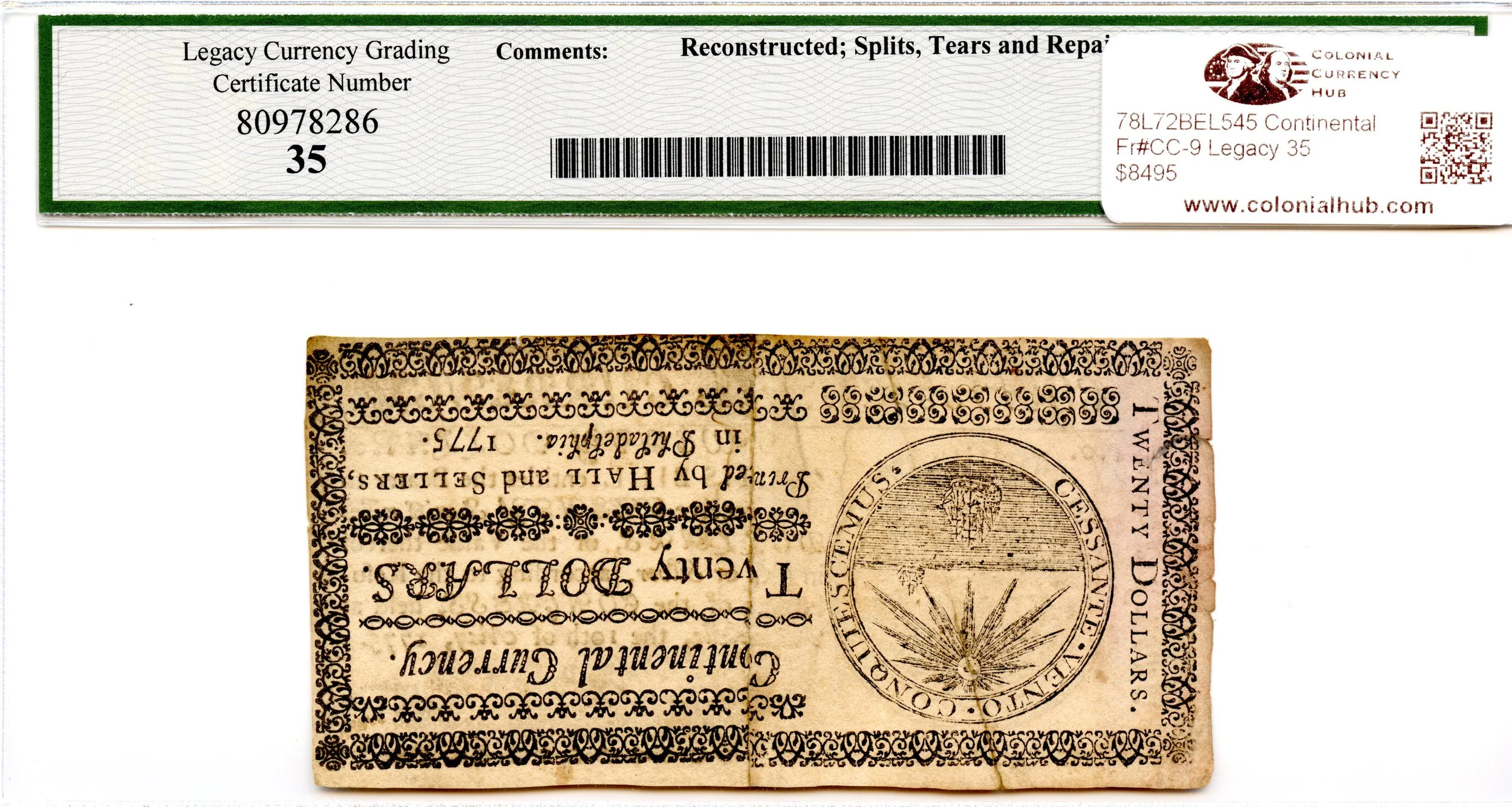
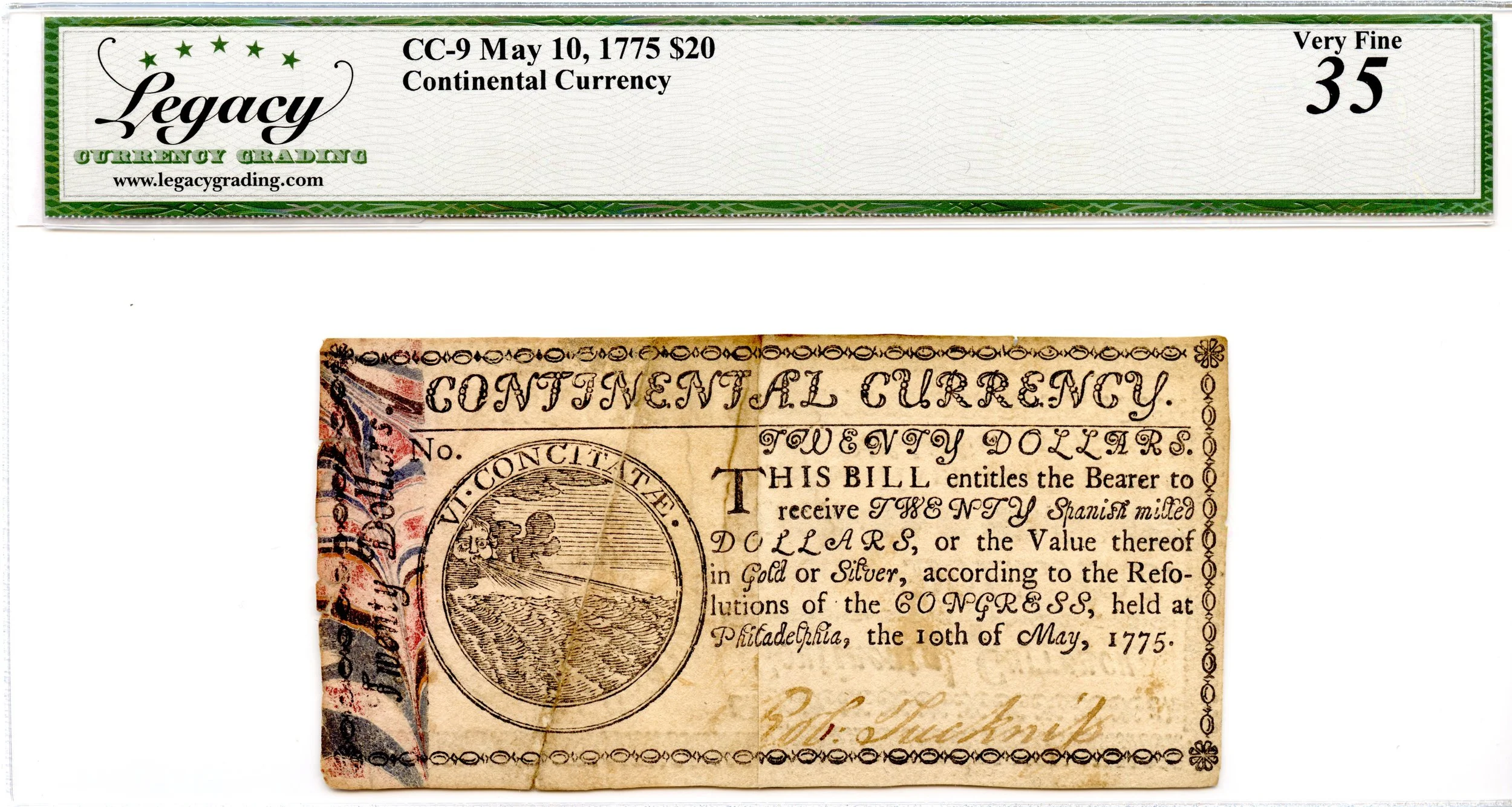
The May 10, 1775 issue was the first Continental series of colonial currency. The front of this $20 note has an emblem depicting a strong wind creating waves. The Latin motto “VI CONCITATE” (Driven by force) encircles the emblem. The reverse of this $20 note has an additional emblem, a sun shining on sailing ships in a calm sea encircled by the Latin motto “CESSANTE VENTO CONQUISCEMUS” (When the storm dies down we will rest). The $20 note is one of the most iconic and coveted pieces of colonial currency ever printed. This note is called “marbled edge” referring to the multicolored polychromed left edge of the paper. This paper was furnished by Benjamin Franklin in France and it was meant to deter counterfeiting. Franklin also designed the emblem on the front of this note. The paper was very thin compared to other continentals making the survivability of these notes low and they are commonly found in low grade with damage/repairs. This “pieced” example is actually two halves of different notes pieced together, nonetheless faces up extremely well and presents a much more affordable example. The marbling is superior to most examples with colors or red, blue, and black showing. An elite note likely the holy grail to any colonial collection.

Signers: Robert Tuckness

The May 10, 1775 issue was the first Continental series of colonial currency. The front of this $20 note has an emblem depicting a strong wind creating waves. The Latin motto “VI CONCITATE” (Driven by force) encircles the emblem. The reverse of this $20 note has an additional emblem, a sun shining on sailing ships in a calm sea encircled by the Latin motto “CESSANTE VENTO CONQUISCEMUS” (When the storm dies down we will rest). The $20 note is one of the most iconic and coveted pieces of colonial currency ever printed. This note is called “marbled edge” referring to the multicolored polychromed left edge of the paper. This paper was furnished by Benjamin Franklin in France and it was meant to deter counterfeiting. Franklin also designed the emblem on the front of this note. The paper was very thin compared to other continentals making the survivability of these notes low and they are commonly found in low grade with damage/repairs. This “pieced” example is actually two halves of different notes pieced together, nonetheless faces up extremely well and presents a much more affordable example. The marbling is superior to most examples with colors or red, blue, and black showing. An elite note likely the holy grail to any colonial collection.

Signers: Robert Tuckness

Date: May 10, 1775

Denomination: $20

Friedberg #: CC-9

State: Continental

Certification: Legacy

Grade: Very Fine 35

Comments: “Reconstructed, Splits, Tears, Repairs”